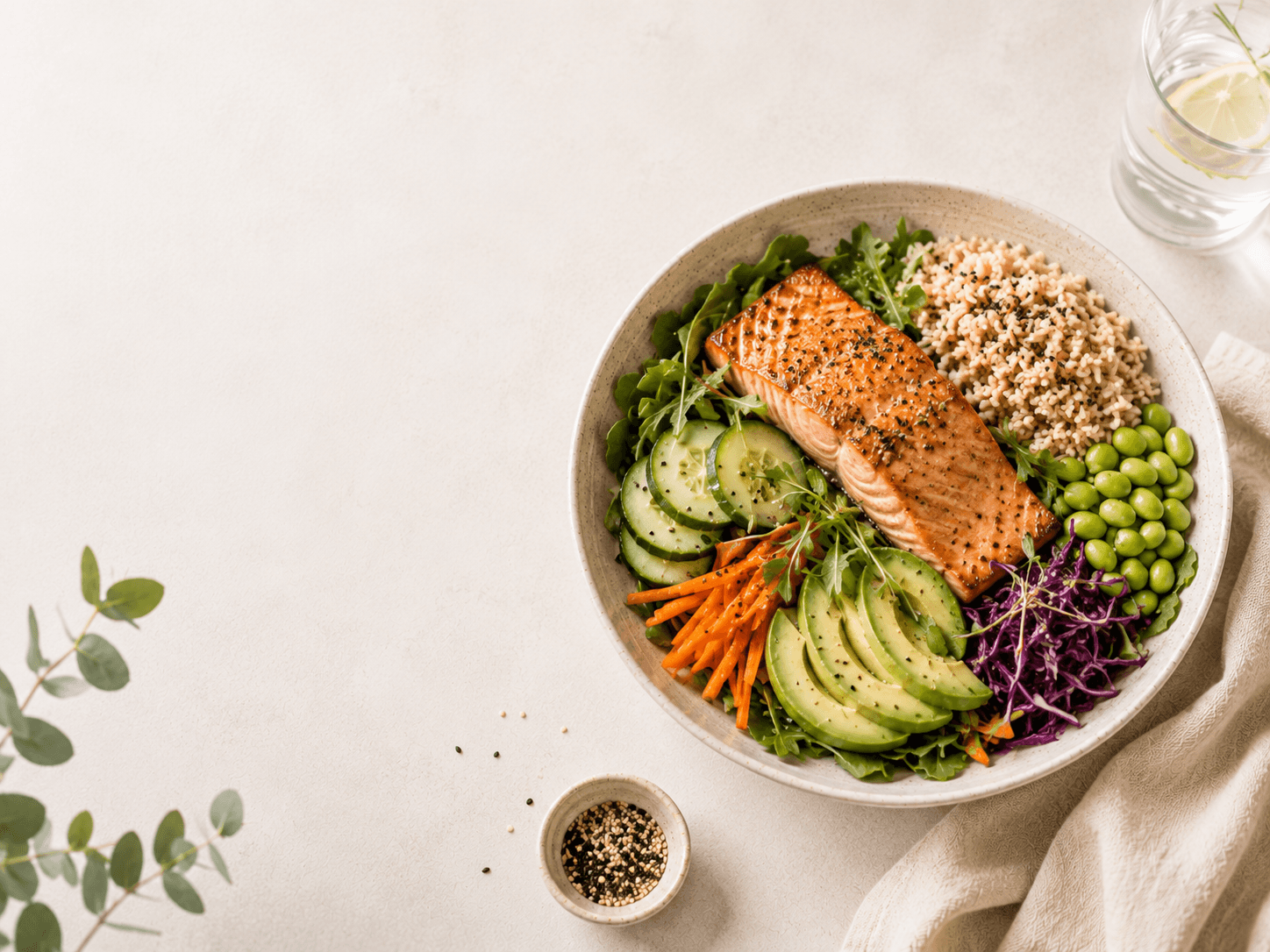
How satisfying a meal feels is influenced by more than calories alone. Its protein and fibre content, physical volume, energy density, fat content, texture and overall composition can all affect how full you feel during and after eating.
Appetite is also influenced by factors beyond the meal itself, including sleep, stress, activity, medications, eating patterns and individual biology. There is no single food or nutrient that can guarantee fullness. However, consistently building meals with a combination of protein, fibre-rich foods, carbohydrates, healthy fats and food volume can provide a practical foundation.
Key takeaways
- Protein can contribute to fullness and may help meals remain satisfying for longer.
- Fibre supports digestive health and can contribute to fullness, although different types of fibre have different effects.
- Vegetables, fruit and other water-rich foods add volume to meals without necessarily adding a large amount of energy.
- Carbohydrates and fats still have an important place in a satisfying, balanced meal.
- Rather than focusing on one “filling” nutrient, aim to combine several meal components.
What do satiation and satiety mean?
Although the terms are often used interchangeably, they describe slightly different parts of the eating experience.
Satiation is the process that occurs while you are eating and eventually prompts you to stop. It describes how full you feel by the end of a meal.
Satiety refers to the period of fullness after eating and before hunger returns.
A satisfying meal ideally provides enough satiation to feel comfortably full when you finish and enough satiety to support you until your next meal or planned snack.
Both are influenced by communication between the digestive system and the brain, alongside the sensory experience of eating, expectations about the meal and your broader physical and emotional state.
1. Protein can make meals more satisfying
Protein provides amino acids that the body uses to build, repair and maintain tissues, including muscle. It can also contribute to appetite regulation.
Research generally indicates that protein produces a stronger short-term fullness response than an equivalent amount of carbohydrate or fat, although the size and consistency of this effect vary between studies and individuals [1,2].
This does not mean that every meal needs to contain a very large amount of protein. It means that meals containing little protein may be less satisfying than meals that include a meaningful source.
Protein-rich foods include:
- Chicken and turkey
- Fish and seafood
- Lean beef, lamb or pork
- Eggs
- Greek yoghurt and high-protein yoghurt
- Cottage cheese
- Milk
- Tofu and tempeh
- Lentils, chickpeas and beans
- Textured vegetable protein
- Nuts and seeds
Compare these two breakfasts
Breakfast one:
- A piece of fruit
- Black coffee
Breakfast two:
- High-protein yoghurt
- Mixed berries
- Granola
- Chia seeds
Both breakfasts contain carbohydrate, but the second also provides protein, fat and fibre. As a result, it is likely to feel more substantial for many people.
Similarly, toast with jam may be made more satisfying by adding eggs, cottage cheese, peanut butter or yoghurt on the side.
The aim is not to remove the carbohydrate food. It is to build around it.
2. Fibre supports fullness and digestive health
Dietary fibre is the part of plant food that is not completely digested in the small intestine. It is found in foods such as vegetables, fruit, wholegrains, legumes, nuts and seeds.
Australian nutrient reference values recommend an adequate fibre intake of approximately 25 grams per day for adult women and 30 grams per day for adult men, although individual requirements may vary [3].
Fibre can support fullness in several ways. Depending on its type and the food containing it, fibre may:
- add physical bulk to a meal
- absorb water
- slow the movement of food through the digestive tract
- require more chewing
- support the production of compounds by gut bacteria that may influence appetite regulation
However, fibre is not a single uniform substance. Different fibres behave differently in the digestive system, and research examining their direct effects on appetite and subsequent food intake has produced mixed findings [4,5].
This means it is more accurate to say that fibre-rich foods can contribute to a satisfying meal rather than promising that adding a specific amount of fibre will automatically prevent hunger.
Fibre-rich foods include:
- Vegetables
- Fresh and frozen fruit
- Rolled oats
- Wholegrain breads and wraps
- High-fibre cereals
- Brown rice, quinoa and barley
- Wholemeal pasta
- Chickpeas, lentils and beans
- Nuts and seeds
- Chia seeds and linseeds
Simple ways to add fibre
- Add berries or grated apple to porridge.
- Include salad vegetables in wraps and sandwiches.
- Add chickpeas or lentils to salads, soups and curries.
- Use wholegrain bread or wraps where appropriate.
- Add frozen vegetables to pasta sauces, stir-fries and tray bakes.
- Include nuts or seeds with yoghurt and fruit.
- Leave edible skins on fruit and vegetables where practical.
When increasing fibre intake, do so gradually and drink adequate fluid. A sudden large increase can cause bloating, discomfort or changes in bowel habits for some people.
3. Food volume also matters
People do not respond only to the energy content of food. The physical amount of food in a meal can also influence how substantial it feels.
Energy density describes how much energy a food contains relative to its weight. Foods that contain plenty of water and fibre, such as vegetables, fruit, legumes, soups and some wholegrains, often provide a larger volume for a given amount of energy than foods containing less water and more fat.
Research on energy density suggests that incorporating water-rich, lower-energy-density foods can increase the amount of food on the plate and support fullness without requiring an equally large increase in energy intake [6,7].
This is one reason non-starchy vegetables are useful in a balanced meal. They provide:
- volume
- fibre
- vitamins and minerals
- colour and texture
- more food to chew
Compare these meals
Lower-volume meal:
- A small portion of chicken and rice
Higher-volume meal:
- Chicken
- Rice
- Roasted capsicum and zucchini
- Broccoli
- A yoghurt-based dressing
The second meal is not necessarily dramatically different in energy content, depending on the quantities used, but it provides considerably more physical volume and variety.
Volume should not mean eating enormous bowls of plain vegetables or trying to stretch every meal as far as possible. The meal still needs adequate protein, carbohydrate and fat. Vegetables are most useful when they complement those components rather than replace them.
4. Carbohydrates contribute energy, fibre and satisfaction
Carbohydrates sometimes receive less attention in discussions about fullness because protein and fibre are often presented as the most satiating nutrients.
However, carbohydrates remain an important part of a satisfying meal. Foods such as oats, potatoes, rice, wholegrain bread, pasta, fruit and legumes provide energy, and many also contribute fibre, fluid and physical volume.
A meal containing only protein and vegetables may leave some people physically full immediately after eating but hungry or low in energy soon afterwards, particularly if they are active or have higher energy needs.
Higher-fibre carbohydrate foods may provide additional nutritional value and support fullness, but refined carbohydrate foods do not need to be completely avoided. The overall meal matters.
For example:
- White rice served with salmon, edamame and vegetables can form a balanced meal.
- Sourdough served with eggs and a vegetable omelette can be satisfying.
- Regular pasta combined with lean mince, tomato sauce and vegetables can still provide a nutritious dinner.
The question is not simply whether a carbohydrate is “good” or “bad.” It is whether the meal as a whole provides enough nourishment and satisfaction for the person eating it.
5. Fat adds flavour and can contribute to satisfaction
Fat is essential for health and helps with the absorption of fat-soluble vitamins. It also contributes flavour, texture and enjoyment, which are important parts of feeling satisfied by a meal.
Sources of predominantly unsaturated fat include:
- Extra-virgin olive oil
- Avocado
- Nuts
- Seeds
- Tahini
- Natural nut butter
- Salmon and other oily fish
Because fat contains more energy per gram than protein or carbohydrate, smaller amounts make a significant contribution to the energy content of a meal.
A meal does not need to be low in fat to be satisfying, nor does adding a large amount of fat guarantee that hunger will remain controlled. A practical approach is to include an appropriate amount alongside protein, carbohydrate and fibre-rich foods.
Examples include:
- avocado in a burrito bowl
- olive-oil dressing on a salad
- peanut butter in a smoothie
- chia seeds in a yoghurt bowl
- feta in a Mediterranean tray bake
- salmon as both a protein and fat source
6. Texture, chewing and eating speed can influence the experience
The physical form of food may affect how quickly it is consumed and how substantial it feels.
Meals containing a variety of textures generally require more chewing and take longer to eat than foods or drinks that can be consumed quickly. Eating more slowly may provide greater opportunity to notice fullness developing during the meal.
For example, a smoothie can be a convenient and nutritious breakfast, but some people find that drinking a meal is less satisfying than eating the same ingredients in a bowl. This does not make smoothies unsuitable. It simply means individual responses differ.
A smoothie may be made more substantial by including:
- a clear protein source
- fruit
- oats
- chia seeds
- nut butter
It may also help to drink it slowly rather than consuming it in a few minutes.
7. Enjoyment matters too
A meal can be physically filling without feeling satisfying.
For example, someone may finish a very large salad yet continue searching for food because the meal lacked flavour, carbohydrate, fat or a food they genuinely wanted.
Satisfaction includes:
- taste
- aroma
- temperature
- texture
- variety
- familiarity
- cultural relevance
- personal preference
Trying to create the lowest-calorie or “cleanest” possible meal may sometimes lead to a meal that is technically large but not enjoyable. This can leave a person feeling deprived and preoccupied with food even when their stomach is full.
A balanced meal should therefore be both physically nourishing and enjoyable to eat.
What does a satisfying meal look like?
A practical starting point is to include:
- A meaningful protein source
- A fibre-rich carbohydrate or other carbohydrate source
- Vegetables or fruit
- A source of healthy fat
- Enough total food for your individual needs
Example: Chicken wrap
- Protein: Chicken
- Carbohydrate: Wholegrain wrap
- Fibre and volume: Lettuce, tomato, cucumber and grated carrot
- Fat and flavour: Avocado or a yoghurt-based dressing
Example: Protein porridge
- Protein: Milk and protein powder
- Carbohydrate and fibre: Rolled oats and apple
- Fat: Walnuts
- Volume: Milk, water and fruit
Example: Teriyaki salmon bowl
- Protein and fat: Salmon
- Carbohydrate: Rice
- Fibre and volume: Cabbage, carrot, cucumber and edamame
- Flavour: Teriyaki sauce, ginger and spring onion
Example: Lentil curry
- Protein and fibre: Lentils
- Carbohydrate: Rice
- Fat: Coconut milk or cooking oil
- Vegetables: Spinach, capsicum, cauliflower and zucchini
Why a “healthy” meal might still leave you hungry
A meal may look nutritious but still be too small or incomplete.
Common examples include:
Salad without enough protein or carbohydrate
Lettuce, cucumber and tomato provide valuable nutrients and volume, but may not form a complete meal by themselves.
Try adding:
- chicken, tuna, eggs, tofu or legumes
- rice, quinoa, potato, bread or a wrap
- avocado, feta, nuts, seeds or dressing
Toast without a substantial topping
Toast provides carbohydrate but may be more satisfying when combined with:
- eggs
- cottage cheese
- peanut butter
- tuna
- avocado and a protein source
Yoghurt that is very small or low in protein
Try adding:
- a higher-protein yoghurt
- fruit
- granola or oats
- chia seeds or nuts
Smoothie made only with fruit and water
Try adding:
- milk or yoghurt
- protein powder
- oats
- chia seeds
- nut butter
Protein and vegetables without enough overall energy
Grilled chicken and salad may appear balanced, but some people may need rice, bread, potato, grains or another carbohydrate source for the meal to provide enough energy and lasting satisfaction.
Does a filling meal prevent all hunger?
No. Hunger is a normal biological signal, and even a well-balanced meal will not keep someone full indefinitely.
How soon hunger returns can be affected by:
- the size and composition of the meal
- time since the previous meal
- activity levels
- sleep
- stress
- menstrual cycle
- medications
- health conditions
- intentional energy restriction
- individual appetite responses
Feeling hungry between meals does not necessarily mean that you have eaten incorrectly. Sometimes a planned snack is appropriate. At other times, reviewing whether the previous meal contained enough protein, carbohydrate, fat, fibre and total energy may be useful.
The bottom line
No single nutrient determines whether a meal will be satisfying.
Protein and fibre can contribute to fullness, while vegetables, fruit and other water-rich foods add volume. Carbohydrates provide energy, and healthy fats add flavour, texture and nutritional value. Enjoyment and adequate portions also matter.
Rather than trying to maximise one component, ask:
- Is there a meaningful protein source?
- Is there a carbohydrate source?
- Does the meal contain fibre-rich foods?
- Is there some healthy fat?
- Is there enough food for my needs?
- Is it something I will actually enjoy eating?
The most satisfying meals are usually not built around one “superfood.” They are created by combining several complementary components in a way that is nourishing, enjoyable and practical.
A note on scope
This article provides general nutrition information and is not a substitute for individual medical or dietetic advice.
References
- Hansen TT, Astrup A, Sjödin A (2021). Nutrients, 13(9):3193. — Are dietary proteins the key to successful body weight management? A systematic review of studies in people with overweight and obesity
- Paddon-Jones D, Westman E, Mattes RD, Wolfe RR, Astrup A, Westerterp-Plantenga M (2008). American Journal of Clinical Nutrition, 87(5):1558S–1561S. — Protein, weight management, and satiety
- Australian Government Department of Health and Aged Care; National Health and Medical Research Council. — Nutrient Reference Values for Australia and New Zealand: Dietary Fibre
- Clark MJ, Slavin JL (2013). Journal of the American College of Nutrition, 32(3):200–211. — The effect of fibre on satiety and food intake: a systematic review
- Salleh SN, Fairus AAH, Zahary MN, Raj NB, Mhd Jalil AM (2019). Foods, 8(1):15. — Unravelling the effects of soluble dietary fibre supplementation on energy intake and perceived satiety in healthy adults: a systematic review and meta-analysis of randomised controlled trials
- Rolls BJ (2017). Nutrition Bulletin, 42(3):246–253. — Dietary energy density: applying behavioural science to weight management
- Rolls BJ (2009). Physiology & Behavior, 97(5):609–615. — The relationship between dietary energy density and energy intake